Case study / Anonymised UK manufacturer
From spreadsheet fragments
to build control.
A manufacturer of approximately 40 people needed one practical way to connect bills of materials, purchasing, inventory and production. I built a lightweight system around the way the business worked.
- Company
- UK manufacturer
- Scale
- Approximately 40 people
- System
- Lightweight operational ERP
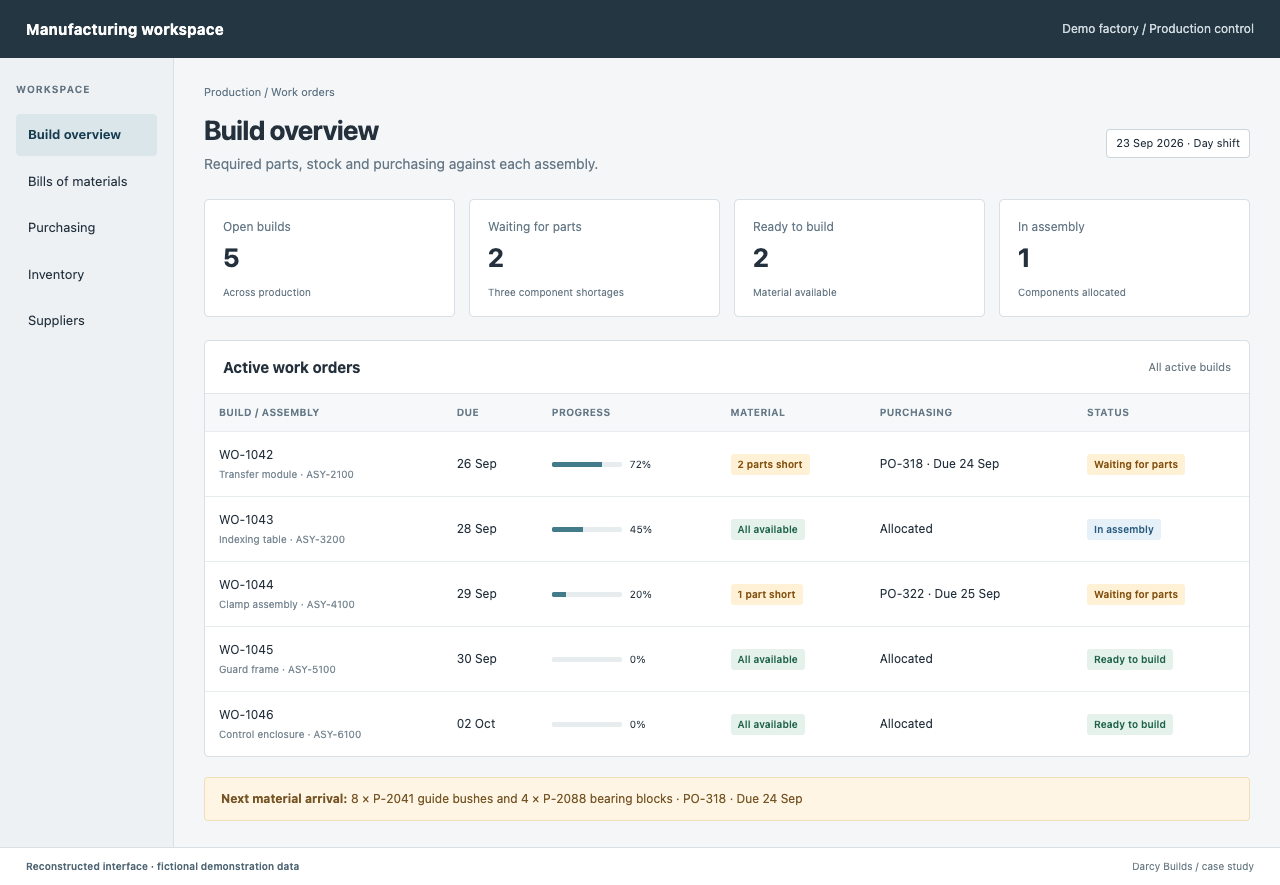
The project is real; the client is anonymised. The screens below are representative reconstructions created for this case study. Part numbers, suppliers, dates and work orders are fictional.
Before
Simple questions.
Too much reconciliation.
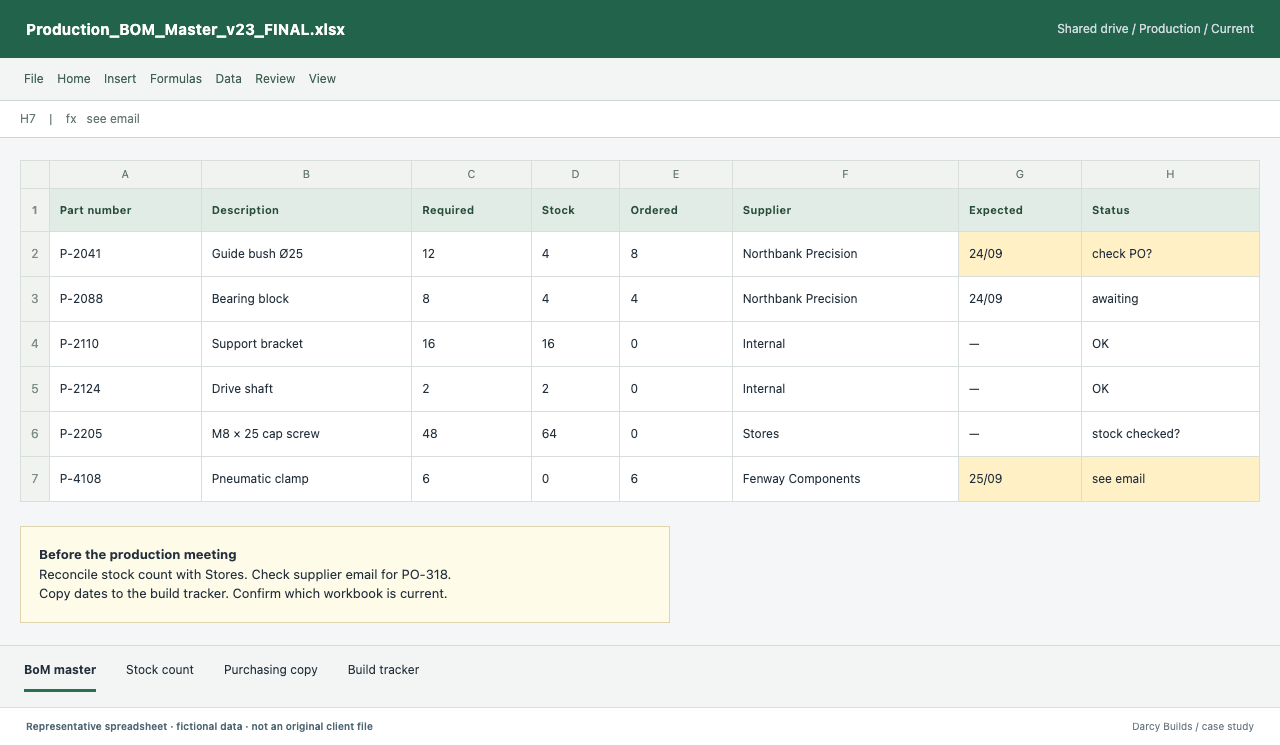
What parts are needed? What’s already ordered? What’s in stock — and what is preventing the build from moving forward? The answers were spread across spreadsheets and manual updates.
The system
Follow the part through the workflow.
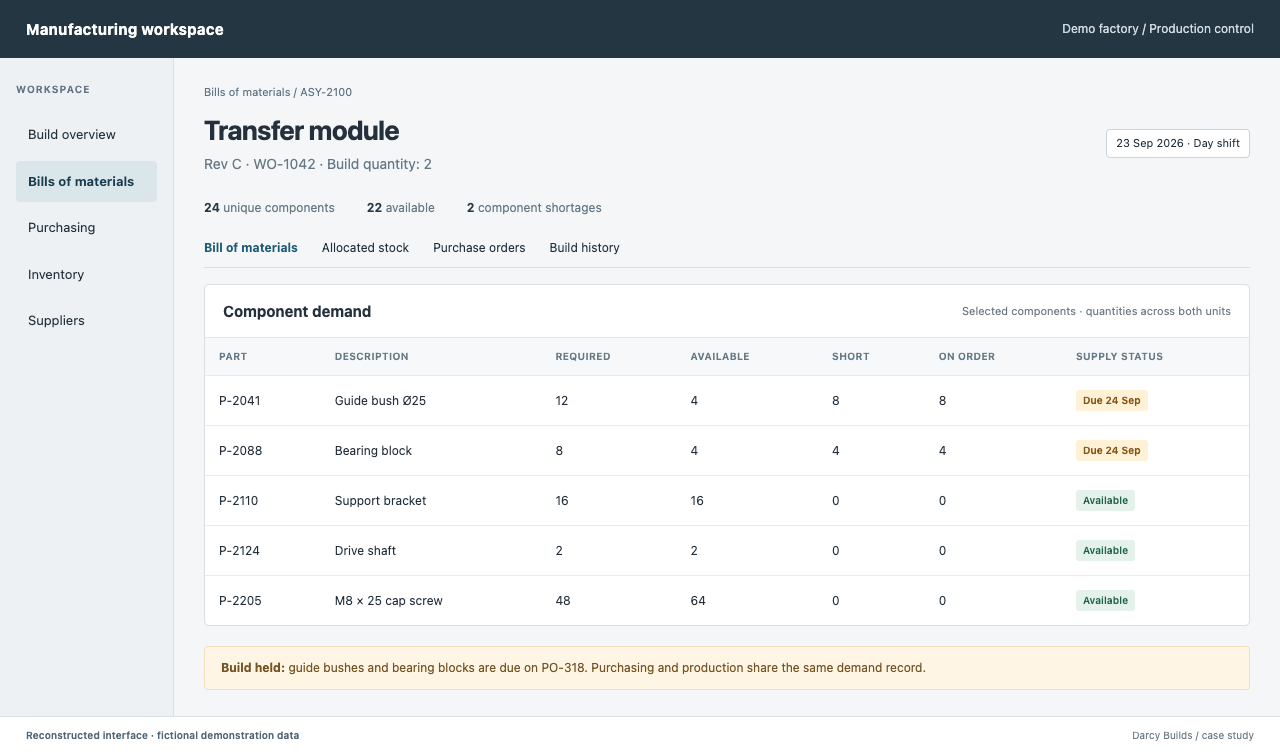
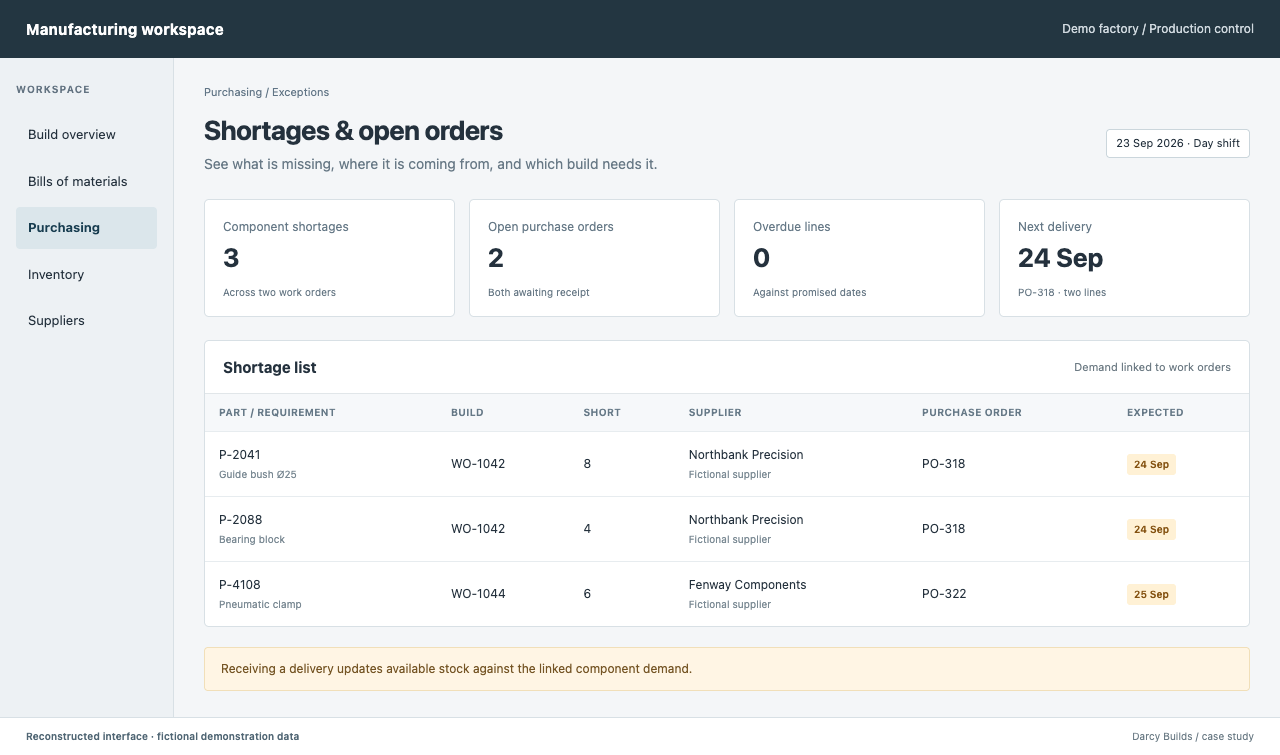
A structured operational model connected the bill of materials to demand, purchasing and inventory, then into the build. The team could work from one system without a heavyweight ERP transformation.
- 01BoM
- 02Demand
- 03Purchasing
- 04Inventory
- 05Build
Two views of the same operation
What the build needs.
What purchasing needs to do.
The outcome
One connected operational system.
The manufacturer could manage the flow from BoM through purchasing and inventory into production. A practical system around the company’s actual process, replacing fragmented spreadsheets and manual reconciliation.
This is the gap Darcy Builds works in: a process too important to stay fragile, without the need for an enterprise replacement programme.
Have a similar operational gap?
Show me the spreadsheet
Send me the spreadsheet, form or workflow that’s causing the pain. I’ll tell you whether I’d build something, improve what you already have, or leave it alone.